
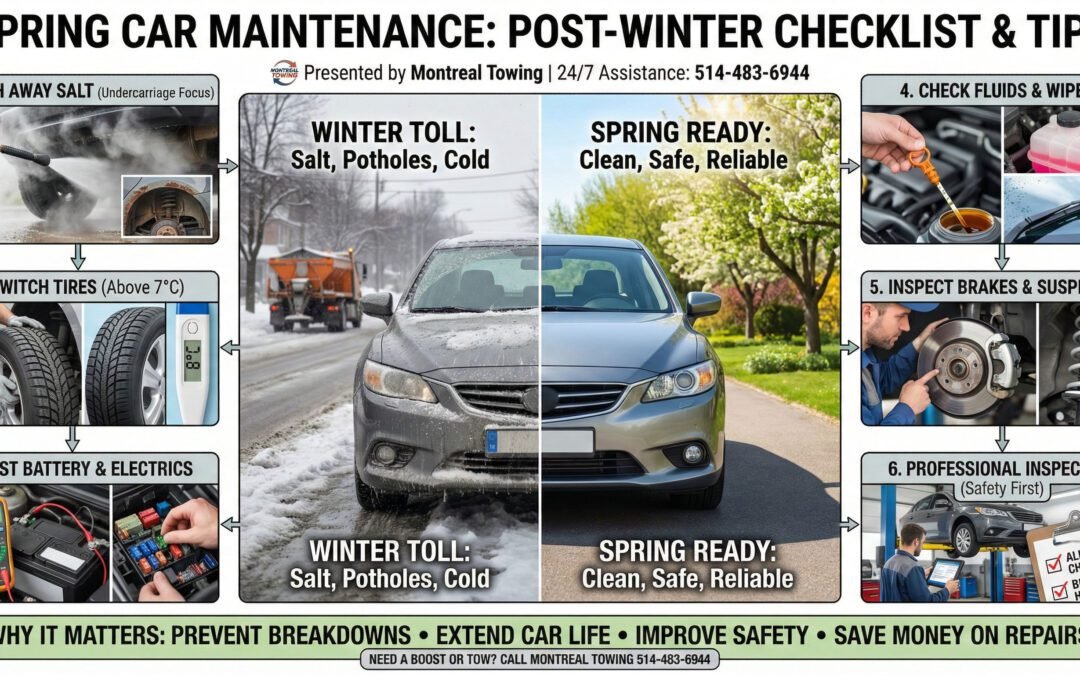
Preparing Your Car for Spring: Post-Winter Maintenance Tips
As spring arrives, now is the perfect time for post-winter car care. A thorough spring car maintenance routine helps you catch small problems before they become expensive repairs or leave you stranded on the side of the road.
At Montreal Towing, we see countless spring breakdowns that could have been prevented with proper maintenance. Here is your complete checklist for getting your vehicle ready for warmer weather.
Why Spring Maintenance Matters in Montreal
Quebec winters create unique challenges for vehicles:
- Road salt corrosion – Salt accumulates on your undercarriage, brake lines, and body panels
- Pothole damage – Montreal roads develop severe potholes that damage suspension and alignment
- Battery strain – Cold temperatures drain batteries and reduce their lifespan
- Fluid degradation – Winter conditions affect oil, coolant, and other fluids
- Tire wear – Winter driving and tire changes create uneven wear patterns
- Wiper damage – Ice and snow destroy wiper blades
Taking time for a vehicle inspection now prevents breakdowns during road trip season and helps your car last longer.
Spring Car Maintenance Checklist
1. Wash Away the Salt
This is the most important first step. Road salt is corrosive and will continue damaging your vehicle long after winter ends if not removed.
- Undercarriage wash – Essential to remove salt buildup from frame, suspension, and brake components
- Wheel wells – Salt accumulates here and causes rust
- Lower body panels – Check for rust spots forming
- Engine bay – Gentle cleaning removes salt and debris
A regular car wash is not enough. Use a pressure washer or visit a facility with undercarriage spray to properly remove winter buildup.
2. Inspect for Rust Damage
After washing, carefully inspect your vehicle for rust:
- Wheel wells and fender edges
- Rocker panels (below doors)
- Rear quarter panels
- Around windshield and window seals
- Door edges and bottoms
- Brake lines and fuel lines underneath
Catching rust early means simple repairs. Ignoring it leads to structural damage and expensive fixes.
3. Switch to All-Season or Summer Tires
Winter tires are designed for cold weather and snow. Driving on them in warm temperatures causes rapid wear and reduced performance.
- When to switch – Once temperatures consistently stay above 7 degrees Celsius
- Inspect your all-seasons – Check tread depth before mounting
- Check for damage – Look for cracks, bulges, or uneven wear
- Balance and alignment – After switching, consider a wheel balance and alignment check
In Quebec, winter tires are mandatory from December 1 to March 15. After March 15, switching to all-seasons improves handling and fuel economy.
4. Check Tire Pressure
Temperature changes affect tire pressure. For every 5 degrees Celsius change, tires gain or lose about 1 PSI.
- Check all four tires plus the spare
- Inflate to manufacturer specifications (found on door jamb sticker)
- Check when tires are cold for accurate readings
Under-inflated tires reduce fuel economy and handling. Over-inflated tires wear unevenly and provide less traction.
5. Test Your Battery
Cold weather is hard on batteries. The chemical reactions that produce power slow down in cold temperatures, forcing your battery to work harder all winter.
- Test the charge – Many auto parts stores test batteries for free
- Clean terminals – Remove corrosion with a wire brush
- Check connections – Ensure cables are tight and secure
- Consider age – Batteries typically last 3-5 years in Quebec conditions
A weak battery that survived winter may fail in summer heat. Testing now prevents unexpected no-starts.
Battery Issues? If your car struggles to start or the battery is over 3 years old, our battery boost service can help in emergencies, but replacement may be the smarter long-term solution.
6. Inspect Brakes
Winter driving and road salt wear down brake components faster than normal.
- Listen for sounds – Squeaking, grinding, or scraping when braking
- Feel for changes – Soft pedal, pulsing, or pulling to one side
- Visual inspection – Look at brake pads through wheel spokes
- Check brake fluid – Should be clear, not dark or cloudy
Brake problems are safety critical. If you notice any issues, have them inspected immediately.
7. Check All Fluids
Cold weather and winter driving affect all your vehicle fluids:
- Engine oil – Check level and color. Schedule an oil change if due.
- Coolant/antifreeze – Check level and condition
- Brake fluid – Should be at proper level and clear
- Power steering fluid – Check level if applicable
- Transmission fluid – Check level and color (if accessible)
- Windshield washer fluid – Switch from winter formula to regular
Low fluid levels can indicate leaks that developed over winter. Investigate any significant drops.
8. Replace Wiper Blades
Winter destroys wiper blades. Ice, snow, and freezing temperatures crack and wear the rubber, leaving streaks and reducing visibility.
- Inspect blade edges for cracks, tears, or missing sections
- Test wipers with washer fluid for streaking
- Replace both front wipers together
- Do not forget the rear wiper if equipped
Spring showers require clear visibility. New wipers are inexpensive insurance against rain-related accidents.
9. Inspect Belts and Hoses
Cold temperatures cause rubber to become brittle. Inspect for damage before warm weather stresses these components further:
- Serpentine belt – Look for cracks, fraying, or glazing
- Coolant hoses – Check for soft spots, bulges, or cracks
- Heater hoses – Inspect connections for leaks
A broken serpentine belt or burst hose can leave you stranded. Replacement is far cheaper than a tow plus emergency repairs.
10. Check Lights
Verify all exterior lights are working:
- Headlights (low and high beam)
- Taillights and brake lights
- Turn signals (front and rear)
- Reverse lights
- Fog lights if equipped
- License plate lights
Burned-out bulbs are a common ticket. Check before police notice.
11. Check Suspension and Alignment
Montreal potholes damage suspension components and throw off alignment:
- Signs of alignment issues – Vehicle pulls to one side, steering wheel off-center
- Suspension symptoms – Clunking noises, excessive bouncing, uneven tire wear
- Visual inspection – Look for damaged boots, leaking shocks
Poor alignment causes rapid tire wear and affects handling. An alignment check after winter is a smart investment.
12. Clean the Interior
Winter brings salt, sand, and moisture inside your vehicle:
- Remove and wash floor mats
- Vacuum carpets thoroughly
- Wipe down all surfaces
- Clean windows inside and out
- Check for musty odors indicating moisture problems
Trapped moisture can lead to mold and unpleasant odors. Thorough cleaning keeps your interior fresh.
Professional Spring Inspection
While many maintenance tasks can be done at home, a professional inspection catches issues you might miss:
- Comprehensive brake inspection including rotors and calipers
- Suspension component testing
- Computerized alignment check
- Battery load testing
- Exhaust system inspection
- Undercarriage rust assessment
A spring inspection typically costs $50 to $100 and can save thousands by catching problems early.
When to Skip DIY and See a Mechanic
Some symptoms require professional attention immediately:
- Warning lights – Check engine, ABS, or other dashboard warnings
- Unusual sounds – Grinding, clunking, or squealing while driving
- Fluid leaks – Puddles under your car after parking
- Brake issues – Any change in braking performance
- Starting problems – Slow cranking or clicking when starting
- Vibrations – New vibrations in steering wheel or vehicle body
Ignoring these symptoms leads to more expensive repairs and potential breakdowns requiring towing.
Spring Maintenance Saves Money
Investing a few hours in spring car maintenance pays off:
| Prevention | Cost | vs. Repair Cost |
|---|---|---|
| Battery test and clean | Free – $20 | vs. Tow + new battery: $300+ |
| Wiper blade replacement | $30 – $50 | vs. Accident from poor visibility: $1,000+ |
| Alignment check | $50 – $100 | vs. Premature tire replacement: $600+ |
| Rust treatment | $100 – $300 | vs. Body panel replacement: $1,000+ |
| Belt replacement | $75 – $150 | vs. Engine damage from broken belt: $2,000+ |
We Are Here If You Need Us
Even with proper maintenance, breakdowns happen. Montreal Towing provides 24/7 roadside assistance including:
- Battery boost service for dead batteries
- Flat tire changes
- Lockout assistance
- Breakdown towing to your mechanic
Save our number in your phone: 514-483-6944. We are here when you need us.
Frequently Asked Questions
When should I switch from winter tires in Quebec?
Quebec law requires winter tires until March 15. After that date, you can switch to all-season or summer tires. Ideally, wait until temperatures consistently stay above 7 degrees Celsius, as winter tires wear quickly in warm weather and provide less grip.
How do I remove salt from under my car?
Use a pressure washer or visit a car wash with undercarriage spray. Focus on wheel wells, suspension components, and the entire underbody. Regular car washes do not reach these areas effectively. Consider multiple undercarriage washes in early spring to remove all salt buildup.
How often should I check tire pressure in spring?
Check tire pressure at least once a month and after significant temperature changes. In spring, when temperatures fluctuate widely, checking weekly is advisable. Always check when tires are cold (before driving) for accurate readings.
Should I replace my car battery after winter?
Not necessarily, but you should have it tested. Batteries typically last 3 to 5 years in Quebec conditions. If your battery is over 3 years old or showed signs of weakness during winter (slow cranking), consider replacing it before summer heat further stresses it.
What is the most important spring maintenance task?
Washing the undercarriage to remove road salt is the most critical spring task for Montreal vehicles. Salt causes rust and corrosion that damages brake lines, fuel lines, suspension components, and the frame. Removing salt promptly prevents expensive long-term damage.
Get Your Car Spring-Ready
A little spring car maintenance goes a long way toward preventing breakdowns, extending your vehicle’s life, and keeping you safe on the road.
Use this checklist to inspect your vehicle after winter. Address any issues promptly, and your car will reward you with reliable performance all season long.
Need help with a breakdown or roadside emergency? Montreal Towing is available 24/7 across all Montreal neighborhoods including Plateau-Mont-Royal, Verdun, Griffintown, and all service areas.
Save Our Number: 514-483-6944
24/7 towing and roadside assistance across Montreal.
Note: All prices mentioned in this article are provided for general reference and informational purposes only. These prices are not fixed and may vary depending on facts, market conditions, location, time, availability, or other relevant factors. Actual prices may change without prior notice. Readers are advised to verify details independently before making any decisions.