
Montreal Winter Driving Emergency Kit: Essential Checklist
Montreal winters are not just cold—they’re unpredictable, harsh, and unforgiving. Temperatures regularly drop to -20°C or lower, snowstorms can appear suddenly, and even a minor breakdown can turn dangerous when you’re stranded in freezing conditions. Every Montreal driver has heard stories of people stuck for hours waiting for help, and the reality is that winter emergencies happen more often than most people think.
Having a properly stocked winter emergency kit in your vehicle isn’t just about convenience—it can be lifesaving. Whether you’re commuting downtown, driving to the suburbs, or traveling on Highway 40 in blizzard conditions, the right supplies can keep you safe, warm, and mobile until help arrives. This comprehensive guide provides the complete checklist of what every Montreal driver needs in their car from November through April.
And remember, even with the best emergency kit, some situations require professional assistance. If you find yourself stranded, stuck, or broken down, Montreal Towing provides 24-hour emergency towing and roadside services across all Montreal neighborhoods. Call 514-483-6944 anytime for immediate help.
Why You Need a Winter Emergency Kit in Montreal
Montreal’s winter conditions create unique hazards that make emergency preparedness essential. Understanding the risks helps you appreciate why having the right supplies matters.
Montreal winter statistics that matter:
- Average January temperature: -10°C, with wind chills reaching -25°C or colder
- Snow accumulation: 200+ cm per winter season
- Extreme cold warnings: Multiple times per winter when temperatures drop below -30°C
- Highway closures: Common during major snowstorms and whiteout conditions
- Battery failure rate: Increases 60% in winter due to cold temperatures
Most common winter vehicle emergencies in Montreal:
- Dead batteries: Cold weather dramatically reduces battery capacity and power
- Getting stuck in snow: Unplowed streets, snowbanks, and icy parking lots trap vehicles daily
- Flat tires: Potholes, hidden debris, and cold-weakened rubber cause frequent flats
- Fuel system problems: Diesel gelling in extreme cold, frozen fuel lines
- Accidents and slide-offs: Icy roads increase collision risk and highway departures
- Mechanical breakdowns: Cold stresses engines, transmissions, and other components
Even if you’re stranded just a few kilometers from home, waiting 30-60 minutes for help in -20°C weather without proper supplies can lead to hypothermia, frostbite, or worse. Your emergency kit provides the resources to stay safe until professional help arrives.
Essential Items for Your Winter Car Emergency Kit
A comprehensive winter emergency kit addresses four critical needs: survival (staying warm and safe), vehicle recovery (getting unstuck or mobile), communication (calling for help), and basic repairs (minor fixes). Here’s exactly what you need.
Cold Weather Survival Items
These items keep you alive and comfortable if you’re stranded for extended periods in freezing temperatures.
Must-have survival supplies:
- Thermal blanket or sleeping bag: Compact emergency blankets (space blankets) reflect body heat and take minimal space. Even better, keep a full sleeping bag rated for -20°C in your trunk
- Extra winter clothing: Pack a spare hat, gloves, warm socks, and a winter jacket even if you’re just driving across town. If you break down in business clothes, you’ll need these
- Hand and foot warmers: Disposable chemical warmers (like HotHands) provide hours of heat and can be lifesaving in extreme cold
- Bottled water: Store at least 2-3 bottles. In extreme cold, water may freeze, so consider keeping one bottle inside the cabin
- Non-perishable snacks: Energy bars, nuts, dried fruit, or chocolate provide calories your body needs to generate heat
- First aid kit: Include bandages, antiseptic, pain relievers, any personal medications, and cold-weather specific items like lip balm and hand lotion
- Candles and matches: A single candle in your car can raise the interior temperature several degrees (but ensure proper ventilation)
Vehicle Recovery and Repair Tools
These tools help you address common breakdown situations and get your vehicle moving again.
Essential recovery tools:
- Jumper cables or portable jump starter: Dead batteries are the number one winter breakdown cause. Quality jumper cables (at least 10 feet long, 4-6 gauge) or a portable lithium jump starter can get you running. If you need professional help instead, our battery boost service is available 24/7
- Folding shovel: Essential for digging out from snowbanks, clearing exhaust pipes, or creating traction paths. Compact military-style shovels work great
- Heavy-duty ice scraper and snow brush: Don’t rely on the cheap plastic one that came with your car. Get a telescoping brush with a solid scraper blade
- Flashlight and extra batteries: LED flashlights are bright and battery-efficient. Consider a headlamp for hands-free work. Store extra batteries separately (they last longer)
- Multi-tool or basic tool kit: Include screwdrivers, pliers, adjustable wrench, and duct tape for minor repairs
- Tire pressure gauge: Cold drops tire pressure; checking regularly prevents flats and blowouts
- Zip ties and duct tape: Temporary fixes for broken trim, loose bumpers, or securing equipment
Traction and Mobility Aids
Getting unstuck from snow or ice is much easier with the right traction aids.
Traction essentials:
- Sand, cat litter, or salt: Keep a small bag or container in your trunk. Spread under drive wheels for traction when stuck. Sand works in all temperatures; salt only melts ice above -12°C
- Traction mats or boards: Purpose-built recovery mats (like MaxTrax) or simple wooden boards provide solid surface for tires to grip. Worth the investment if you drive regularly
- Tow strap or recovery rope: If someone stops to help pull you out, a proper tow strap (not a chain) prevents vehicle damage. Make sure it’s rated for vehicle recovery
- Properly inflated spare tire: Check spare pressure monthly; cold deflates tires. A flat spare is useless when you need it. Professional tire change service is available if your spare is damaged or you can’t change it safely
- Jack and lug wrench: Ensure these are in your vehicle and you know how to use them. Practice changing a tire at home before you need to do it roadside
Communication and Safety Equipment
Staying visible and connected is critical when stranded, especially on highways or rural roads.
Safety and communication gear:
- Fully charged cell phone: Keep your phone charged at all times in winter. Consider keeping a portable battery bank in your emergency kit
- Car phone charger: Multiple types if possible—USB, 12V outlet, and even a solar charger for extended emergencies
- Emergency contact numbers: Save roadside assistance, towing services, insurance company, and emergency contacts. Store 514-483-6944 (Montreal Towing) in your phone
- Reflective warning triangles or road flares: Place behind your vehicle to warn approaching traffic, especially critical at night or in poor visibility
- High-visibility vest: Wear this if you need to exit your vehicle on a roadside so drivers can see you
- Whistle: If you’re off-road or in an area where you might not be easily visible, a whistle carries much farther than your voice
- Portable radio: Battery or hand-crank emergency radio keeps you informed of weather conditions and road closures
Where to Store Your Emergency Kit
Having the right supplies doesn’t help if you can’t access them when you need them. Proper storage and organization are essential.
Trunk storage tips:
- Use a plastic bin or duffle bag to keep items organized and prevent them from rolling around
- Place heavier items (sand, shovel) on the bottom; lighter survival items on top
- Keep the kit accessible—don’t bury it under groceries or other cargo
- Label the container clearly so family members or anyone helping you can find supplies
Items to keep in the passenger cabin (not trunk):
- Phone charger (plugged into 12V outlet)
- Small flashlight in glove box
- Ice scraper and snow brush (need immediate access)
- One blanket on back seat (instant warmth if breakdown happens)
- Bottled water (prevents freezing and gives immediate access)
Seasonal kit rotation:
- November: Assemble or refresh your winter kit; check expiration dates on food and batteries
- December-March: Monthly checks to ensure nothing has been removed or used
- April-May: Remove winter-specific items (but keep jumper cables, first aid, basic tools year-round)
Winter Vehicle Maintenance Checklist
The best emergency kit is prevention. Proper vehicle maintenance dramatically reduces winter breakdown risk.
Pre-winter vehicle inspection (October-November):
- Battery test: Have your battery load-tested at a garage. Replace any battery over 3-4 years old or showing weakness. Cold reduces battery capacity by 30-60%
- Winter tires: Install winter tires (legally required in Quebec from December 1 to March 15). Check tread depth—minimum 4/32 inch, but 6/32+ is better
- Tire pressure: Check monthly as temperatures drop. Every 5°C drop in temperature reduces pressure by 1 PSI. Keep tires inflated to recommended PSI
- Antifreeze/coolant: Test concentration; should protect to at least -40°C. Top up if needed
- Windshield washer fluid: Use winter-grade fluid rated to -40°C. Keep a spare jug in your trunk
- Oil change: Consider switching to synthetic oil for better cold-weather performance
- Wiper blades: Replace worn blades; consider winter blades that resist ice buildup
- Lights: Test all lights (headlights, brake lights, turn signals). Clean lenses if covered in road salt film
Throughout winter maintenance habits:
- Keep fuel tank at least half full: Prevents fuel line freeze-up and ensures you can run the engine for heat if stranded
- Wash undercarriage regularly: Road salt accelerates rust; spray underneath to remove salt buildup
- Check tire pressure weekly: Tires lose pressure as temperature fluctuates
- Inspect wiper fluid level: You’ll use a lot; refill frequently
- Monitor dashboard warning lights: Address any warnings immediately—cold weather stresses weak components
What to Do in Common Winter Emergencies
Your emergency kit gives you the tools, but you also need to know how to use them effectively in different situations.
Dead Battery in Cold Weather
Immediate actions:
- Turn off all electrical accessories (radio, lights, climate control)
- If you have jumper cables and another vehicle, attempt a jump start
- If using a portable jump starter, connect properly (red to positive, black to negative/ground)
- Let the working vehicle run 2-3 minutes before attempting to start yours
- If successful, drive at least 20 minutes to recharge the battery
If you’re not comfortable jump-starting or don’t have equipment, don’t risk doing it wrong in extreme cold. Call for help at 514-483-6944 and our team will safely boost your battery on-site.
Stuck in Snow or Ice
Recovery steps:
- Don’t spin your wheels excessively—you’ll dig deeper
- Turn off traction control temporarily
- Use your shovel to clear snow around all four tires and under the car
- Spread sand, salt, or cat litter in front of and behind drive wheels
- Place traction mats or cardboard under tires
- Try the rocking method: gently shift between drive and reverse to build momentum
- Straighten your steering wheel for maximum traction
If you can’t free yourself after 10-15 minutes, you risk transmission damage and draining your battery. Professional winching service can pull you out safely using proper recovery equipment and techniques.
Stranded on Highway During Snowstorm
Safety protocol:
- Stay with your vehicle—it provides shelter and makes you visible to rescuers
- Turn on hazard lights and place reflective triangles behind your vehicle if safe to do so
- Run the engine periodically (10 minutes per hour) for heat, but ensure exhaust pipe is clear of snow
- Crack a window slightly for ventilation when engine is running (prevent carbon monoxide)
- Use blankets, extra clothing, and body warmers to conserve heat
- Stay hydrated with bottled water; eat snacks to maintain energy
- Call 511 for road conditions and estimated rescue time
- Call emergency services if medical help is needed
Do not leave your vehicle to walk for help unless you can see a building within a short, safe distance. People get disoriented and lost quickly in blizzard conditions.
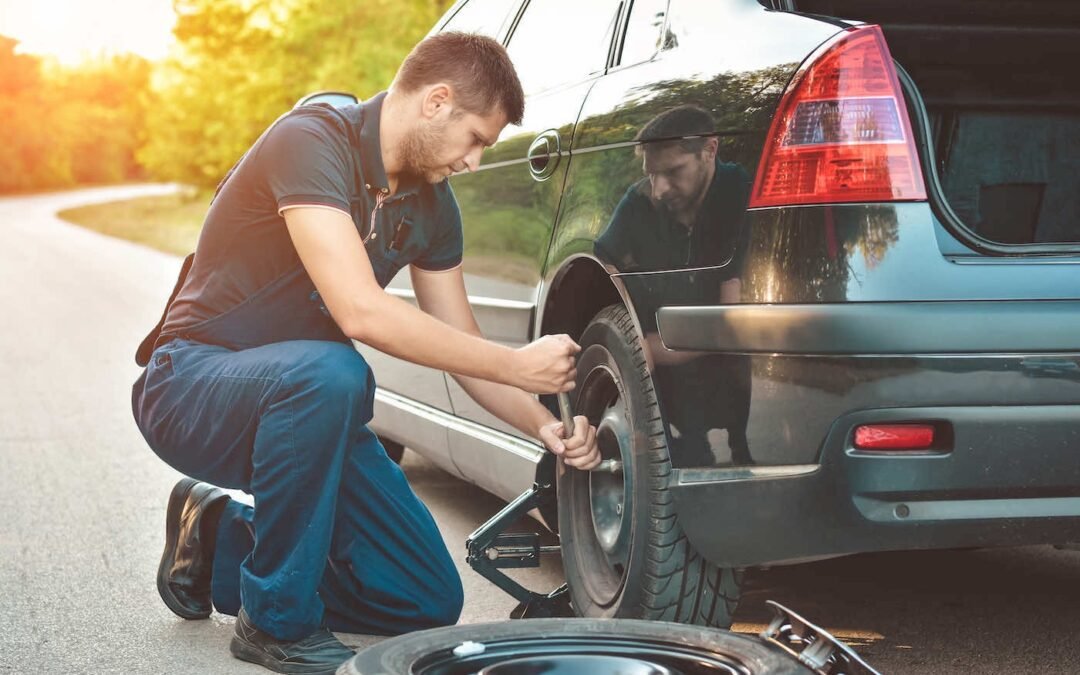
Flat Tire in Winter Conditions
Tire change considerations:
- Find the safest possible location off traffic
- Turn on hazard lights and set up warning triangles
- Put on your high-visibility vest and winter gloves
- Use your shovel to clear snow around the flat tire
- Place cardboard or a board under the jack for stability on snow/ice
- Follow standard tire change procedures
However, changing a tire on an icy highway shoulder in -20°C is extremely dangerous. If conditions are unsafe, traffic is heavy, or you’re not confident, call for professional roadside assistance instead. Your safety is more important than saving time.
When to Call for Professional Help
Even the best emergency kit and preparation can’t solve every situation. Knowing when to call professionals keeps you safe and prevents making problems worse.
Call for professional help when:
- You’re on a busy highway with heavy traffic passing close by
- Weather conditions are extreme (blizzard, whiteout, -30°C windchill)
- You’re in an unsafe location (bridge, tunnel, blind curve)
- Your emergency kit is incomplete or missing critical items
- You’ve attempted DIY recovery for 15+ minutes without success
- The problem is beyond your skill level (major mechanical failure)
- You have children, elderly passengers, or anyone vulnerable to cold
- Multiple systems have failed (dead battery + flat tire, for example)
- You feel unsafe, uncertain, or uncomfortable for any reason
Montreal Towing provides 24/7 emergency services:
- Battery boost and jump starts
- Tire changes (we bring tools and do the work)
- Winching and snow recovery
- Emergency towing to your mechanic or home
- Fuel delivery if you run out
- Lockout service if keys are locked inside
We respond across all Montreal neighborhoods, including highways and rural areas. Our trucks are equipped for winter operations and our operators work in all weather conditions. Call 514-483-6944 anytime you need help.
Frequently Asked Questions
What’s the most important item in a winter car emergency kit?
The single most important item is warm clothing and blankets. Hypothermia is the greatest immediate threat when stranded in Montreal winter temperatures. Everything else in your kit helps you solve problems or call for help, but staying warm keeps you alive. A thermal blanket, extra winter coat, hat, and gloves should always be in your vehicle from November through April. A fully charged cell phone is the second most critical item so you can call for help when needed.
How often should I check my winter emergency kit?
Check your kit monthly during winter (December through March). Verify that food hasn’t expired, batteries are fresh, your spare tire is properly inflated, and nothing has been removed or used. Do a full kit refresh at the start of winter in November—replace expired items, check equipment functionality, and add any missing supplies. Also check the kit after any time you use something from it so you can replace it before the next emergency.
Do I need different emergency kits for city vs highway driving?
The basic kit is the same, but highway and rural driving requires additional items. For highway travel, add extra blankets (help may take longer), more food and water (in case of extended delays), a full tank of gas before trips, and better communication tools (portable radio, extra battery bank). City drivers can have a slightly lighter kit since help typically arrives faster, but the core survival items (warmth, water, phone) are essential for everyone. If you regularly drive outside Montreal, invest in the more comprehensive highway kit.
What should I do if I’m stranded overnight in my car?
If you must stay in your vehicle overnight during winter, follow these steps: Call 911 or local police to report your location so rescuers know where you are. Stay inside your vehicle—it’s warmer and safer than being outside. Run your engine 10 minutes every hour for heat, but always ensure the exhaust pipe is clear of snow to prevent carbon monoxide poisoning. Use blankets and extra clothing to conserve body heat. Keep a window cracked slightly for ventilation. Eat snacks and drink water to maintain energy and hydration. Stay awake if possible by doing light exercises like wiggling toes and fingers. Check in with someone by phone every hour if possible. Most importantly, don’t panic—people survive overnight in vehicles regularly with proper preparation.
Does CAA provide emergency kits, or should I build my own?
CAA (Canadian Automobile Association) sells pre-assembled emergency kits through their stores and website, which can be convenient starting points. However, most experts recommend building your own custom kit tailored to your specific vehicle, typical driving patterns, and personal needs. Pre-made kits often lack important items like extra warm clothing, adequate food and water, or specific tools for your vehicle. CAA membership itself provides roadside assistance services (battery boosts, towing, tire changes), but that doesn’t replace having physical supplies in your car for immediate use while waiting for help to arrive.
Be Prepared for Montreal Winters
A well-stocked emergency kit provides peace of mind every time you drive in Montreal winter. You hope you’ll never need it, but if you do, having the right supplies can make the difference between a minor inconvenience and a dangerous situation.
Invest an afternoon and a modest budget to assemble your kit properly. Check it regularly, replace used items, and make sure everyone who drives the vehicle knows where it is and what’s in it. Combine your emergency kit with good winter driving habits, proper vehicle maintenance, and the knowledge of when to call for professional help.
And when you do need assistance—whether it’s a dead battery at 2 AM, being stuck in a snowbank, or a breakdown on the highway—Montreal Towing is here 24/7 with fast, professional service across all Montreal neighborhoods.
Call 514-483-6944 anytime for emergency roadside assistance and towing.
Stay safe out there. Be prepared. And know that help is just a phone call away.