
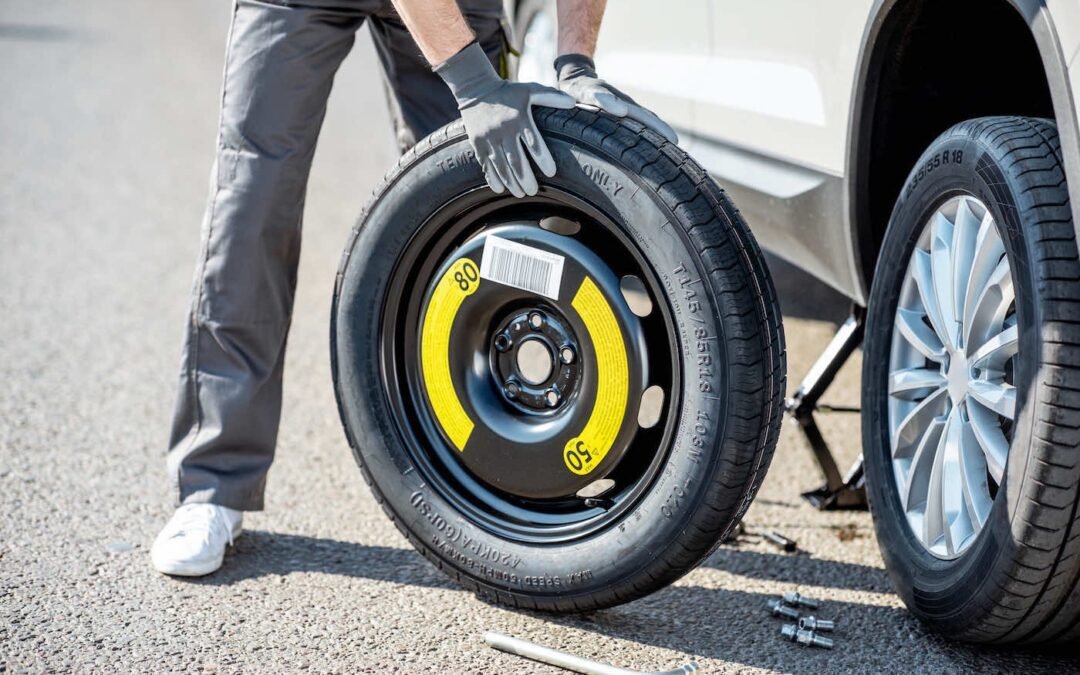
Flat Tire in Montreal Winter? Complete Tire Change Guide
It always seems to happen at the worst possible time. You hear a thump-thump-thump, your steering feels heavy, and a warning light flashes on your dashboard. In Montreal winter, a flat tire is more than an inconvenience, it can be dangerous when roads are icy, visibility is low, and the temperature is well below freezing.
Between deep potholes, hidden ice chunks, sharp debris buried under snow, and cold-weakened rubber, flat tires are extremely common in Montreal from November through April. Knowing exactly what to do when a tire blows or slowly deflates can keep you safe, protect your vehicle, and save you money. And if you decide it’s not safe or comfortable to change the tire yourself, our 24/7 tire change service is always available at 514-4836944.
This guide explains step-by-step what to do with a flat tire in Montreal winter, when it’s safe to drive, when to pull over, how to change a tire correctly, and when to call a professional instead.
Why Flat Tires Are So Common in Montreal Winters
Montreal’s roads take a beating every winter. Freeze-thaw cycles create potholes, snowplows scrape surfaces, and road salt accelerates wear. All of this creates a perfect environment for flat tires and tire damage.
Common causes of winter flat tires in Montreal:
- Potholes: Deep, sharp-edged potholes can pinch the tire against the rim, causing sidewall bubbles, tears, or immediate blowouts.
- Hidden debris under snow: Nails, screws, broken glass, metal pieces, and rocks get buried in slush and snowbanks and are hard to see until it’s too late.
- Cold temperature pressure drops: Tire pressure drops roughly 1 PSI for every 5°C drop in temperature. Underinflated tires are more vulnerable to damage.
- Old or worn tires: Tires that are already worn thin are more likely to fail when stressed by cold and rough roads.
- Driving on underinflated tires: This causes excessive heat buildup and internal damage, eventually leading to blowouts.
- Impact with curbs: Sliding on ice into a curb can bend the rim or damage the tire bead, causing slow leaks or instant flats.
Winter tires help with traction, but they don’t make you immune to damage. In fact, because you rely on them so heavily in winter, any failure is even more stressful. That’s why having a solid plan for flat tires is essential for every Montreal driver.
What to Do Immediately When You Get a Flat Tire
What you do in the first minute after noticing a flat can make the situation safer and prevent further damage to your vehicle.
Step 1: Don’t slam on the brakes.
If you suddenly brake hard on a flat tire, especially on ice or snow, you risk losing control of the vehicle. Instead, take your foot off the accelerator and let the car slow down gradually.
Step 2: Steer to a safe location.
- Turn on your hazard lights immediately.
- Move slowly toward the shoulder, a parking lot, or a side street with as little traffic as possible.
- Avoid stopping on narrow bridges, sharp curves, or spots where other drivers can’t see you.
- In winter, avoid stopping in deep snow; it can make changing the tire harder and may get you stuck.
Step 3: Park safely and secure the vehicle.
- Put the car in park (automatic) or in gear (manual).
- Engage the parking brake.
- Keep hazard lights on the entire time.
- If you have safety triangles or flares, place them behind your car, especially at night or in low visibility.
Step 4: Decide if it’s safe to change the tire yourself.
Ask yourself:
- Is there enough space between my car and traffic?
- Is the ground flat and stable (not ice, slush, or deep snow)?
- Do I have proper winter clothing and gloves?
- Do I feel confident using a jack and tools?
If the answer to any of these is “no,” or if you’re on a busy highway, call for professional help. Our roadside assistance team can come to you anywhere in Montreal and change the tire safely. Call 514-4836944 anytime.
Is It Safe to Drive on a Flat or Low Tire?
Driving on a flat or very low tire is extremely risky, especially in winter. It can damage your vehicle and put you and others in danger.
Short answer: Only drive on a flat tire long enough to move to a safe stopping spot, and at very low speed. Never continue your trip on a flat or nearly flat tire.
Dangers of driving on a flat tire:
- Rim damage: Driving even a short distance on a flat can bend or crack the wheel, which is much more expensive than a tire.
- Sidewall destruction: A repairable puncture becomes unrepairable if you crush and shred the sidewall driving on it.
- Loss of control: A flat affects steering, braking, and stability, especially on icy Montreal roads.
- Damage to suspension and alignment: Driving on a flat changes how weight is distributed, stressing suspension components.
- Complete blowout: A soft tire can catastrophically fail, making control even harder.
If you’re more than a few hundred meters from a safe place to stop, pull over as soon as you can safely do so and call for help. Our tire change service can come to you, change your tire on the spot, or tow you if necessary.
What You Need to Change a Tire Safely
Before attempting a tire change, make sure you have the right tools and conditions.
Essential tools:
- Spare tire (properly inflated) or compact “donut” spare.
- Car jack (usually included with the vehicle).
- Lug wrench (tire iron) that fits your lug nuts.
- Owner’s manual (for jack points and torque specs).
Recommended extras for Montreal winter:
- Warm gloves and hat.
- Kneeling mat or piece of cardboard (for snow/ice).
- Small shovel to clear snow around the flat tire.
- Flashlight or headlamp for dark evenings.
- Wheel chocks or bricks to block opposite wheels.
If you don’t have these tools or aren’t comfortable using them on ice and snow, don’t risk injury. Call our 24/7 team at 514-4836944 and we’ll do the heavy work for you.
Step-by-Step: How to Change a Tire in Winter
Follow these steps carefully if you decide it’s safe to change the tire yourself.
Step 1: Prepare the Area
- Park as far off the road as safely possible.
- Turn on hazard lights.
- Place wheel chocks (or rocks/bricks) in front of and behind the wheel diagonally opposite the flat.
- Use your shovel to clear snow and ice around the flat tire and under the car where the jack will go.
Step 2: Loosen the Lug Nuts (Before Jacking)
- Remove the hubcap or center cover if necessary.
- Attach the lug wrench and turn each nut counterclockwise just enough to “break” it loose (¼–½ turn).
- Do not remove the nuts completely yet.
- If a nut is very tight, use your body weight by carefully stepping on the wrench arm for extra leverage.
Tip: Loosening nuts while the tire is still on the ground prevents it from spinning and gives you better leverage.
Step 3: Position the Jack Safely
- Consult your owner’s manual for correct jack points (usually reinforced metal along the frame near the wheel).
- Never place the jack on soft snow, loose ice, or an uneven surface. If necessary, place a solid board under the jack for stability.
- Start lifting slowly until the jack engages and the car begins to rise.
Safety warning: Never put any part of your body under the vehicle while it is supported only by a jack.
Step 4: Raise the Vehicle
- Raise the car until the flat tire is just off the ground (2–3 cm).
- Confirm the jack is stable and not leaning.
Step 5: Remove the Lug Nuts and the Flat Tire
- Finish unscrewing all the loosened lug nuts and place them in a safe spot.
- Grasp the tire with both hands and pull it straight toward you to remove it from the hub.
- Be careful if there is ice or slush making the tire slippery.
Step 6: Mount the Spare Tire
- Line up the holes in the spare wheel with the studs on the hub.
- Lift the spare into place (keep your back straight and lift with your legs).
- Push the wheel onto the hub until it sits flush.
Step 7: Hand-Tighten the Lug Nuts
- Thread the lug nuts back onto the studs by hand.
- Tighten them in a star pattern (e.g., top, bottom right, bottom left, upper left, upper right) to ensure even pressure.
- Do not fully tighten with the wrench yet—just snug them by hand.
Step 8: Lower the Vehicle and Fully Tighten
- Carefully lower the jack until the tire touches the ground and the car’s weight is fully on the spare.
- Remove the jack.
- Use the lug wrench to fully tighten each nut in the same star pattern.
- Put firm, steady pressure on the wrench but don’t jump on it.
If you have a torque wrench, tighten the nuts to the manufacturer’s recommended torque (usually listed in the owner’s manual).
Step 9: Check the Spare and Clean Up
- Make sure the spare tire’s sidewall lists the correct pressure and the tire looks properly inflated.
- Put the flat tire, jack, and tools back into your trunk.
- Remove wheel chocks or blocks.
- Turn off hazard lights when you merge back into traffic.
Important: Compact “donut” spares are temporary. Do not drive faster than the speed indicated on the tire (usually 80 km/h) and avoid long distances. Get your main tire repaired or replaced as soon as possible.
When You Should NOT Change a Tire Yourself
Changing a tire in a warm garage is one thing. Doing it on a snowy shoulder at night is very different. In many winter situations, calling a professional is the safest option.
Call for professional help instead if:
- Traffic is heavy or passing close to your car.
- The road is icy, sloped, or uneven.
- You don’t have winter clothing or gloves and it’s extremely cold.
- You’re not confident using the jack and tools.
- Your spare tire is missing, flat, or visibly damaged.
- You suspect more than just a puncture (e.g., bent rim, suspension damage).
- Multiple tires are damaged, or your vehicle is stuck as well as flat.
In these cases, it’s safer and often faster to call Montreal Towing. Our tire change service comes to you with professional equipment and experienced technicians. If the tire can’t be safely replaced roadside, we can tow you to a tire shop. Call 514-4836944 anytime.
Preventing Flat Tires in Montreal Winter
While no one can avoid every nail or pothole, you can dramatically reduce your risk with some smart habits.
Tips to prevent winter flats:
- Use quality winter tires: Good winter tires with proper load rating and tread depth handle impacts better.
- Check tire pressure regularly: At least once a month in winter. Refill to recommended PSI when cold.
- Avoid potholes when safe: Slow down in known rough areas; don’t swerve suddenly on ice.
- Don’t ride close to snowbanks: Plowed snow often hides curbs, debris, and metal objects.
- Rotate tires: Regular rotation helps even wear and allows early detection of problems.
- Inspect tires visually: Look for bulges, cracks, exposed cords, or embedded objects.
- Respect load limits: Overloading your vehicle stresses tires and increases risk of blowouts.
- Avoid hitting curbs: Especially when parking with snow covering the edges.
Even with perfect maintenance, Montreal’s winter roads can still surprise you. That’s why having a reliable roadside team on speed dial is essential.
Frequently Asked Questions
How much does a tire change service cost in Montreal?
Professional roadside tire change service in Montreal typically starts around the price of a standard roadside visit. The exact amount depends on your location, time of day, and whether additional services (like towing) are required. The advantage is that a trained technician comes to you, brings the tools, handles the heavy lifting, and makes sure everything is tightened safely, even in winter conditions. For an exact quote based on where you’re stuck, you can call 514-4836944 anytime.
Can I drive to a garage with a flat tire?
Driving on a flat tire is strongly discouraged. You can cause serious damage to the wheel, suspension, and even the body of the vehicle. It’s only acceptable to drive a very short distance at very low speed to reach a safe spot off the road, like a nearby parking lot, and even then you risk damaging the rim. If the garage is more than a few hundred meters away, it’s safer and usually cheaper in the long run to change the tire on the spot or call a towing and roadside service to help you.
Is it safe to change a tire on the highway in winter?
Changing a tire on the shoulder of a highway is risky at any time, and even more dangerous in winter when roads are slippery and visibility is reduced. If you must stop on a highway, pull as far onto the shoulder as possible, turn on your hazard lights, and assess whether you’re comfortable and safe. In many highway situations, the safest option is to stay inside your vehicle with your seatbelt on, call for professional roadside assistance, and wait for a properly equipped truck with warning lights and safety gear to arrive.
How long can I drive on a spare tire?
Compact “donut” spare tires are designed for temporary, short-distance use. Most manufacturers recommend driving no more than about 80 kilometers and not exceeding the speed indicated on the tire (often 80 km/h). They have less tread, weaker construction, and can’t handle the same loads or speeds as a full-size tire. Full-size spares can be used longer, but you should still repair or replace the damaged tire as soon as possible and return the spare to its emergency role.
Can winter pothole damage be repaired, or do I need a new tire?
It depends on where the damage is. A small puncture in the tread area can often be patched or plugged by a tire shop. However, sidewall bubbles, deep cuts, or damage near the shoulder of the tire are not safely repairable and usually mean the tire must be replaced. If you hit a pothole hard and notice a vibration, bulge, or new noise, have both the tire and rim inspected as soon as possible. In the meantime, if the tire is losing air or feels unsafe, call for roadside assistance rather than continuing to drive on it.
Flat Tire in Montreal? We’ll Get You Rolling Again
A flat tire in winter is stressful, cold, and often dangerous if you’re on a busy road or poorly lit street. You don’t have to handle it alone. Montreal Towing provides 24/7 roadside tire change service across the entire city, including Plateau-Mont-Royal, Verdun, Old Montreal, Côte-des-Neiges, and all surrounding neighborhoods.
What we offer:
- 24/7 emergency tire change service in all weather conditions.
- Professional tools and proper jacking techniques for your vehicle type.
- Safe service on roadsides, parking lots, and driveways.
- Option to tow your vehicle to a tire shop if the spare is missing or damaged.
- Clear pricing before we start, with no surprise fees.
Don’t risk injury or damage trying to change a tire in dangerous conditions. One quick call brings help straight to you.
Call Montreal Towing now at 514-4836944 for fast, safe tire change service anywhere in Montreal.
Stuck with a flat? We’ll get you rolling again—day or night, snow or shine.