
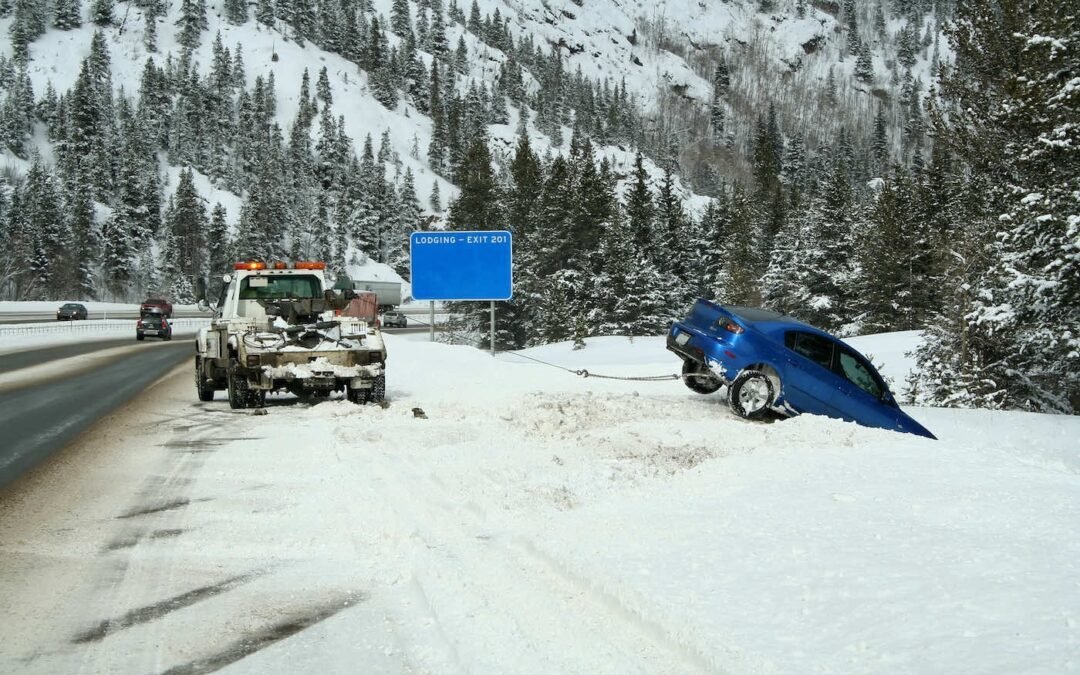
Stuck in Snow in Montreal? Complete Vehicle Recovery Guide
You press the gas pedal, hear your tires spinning, but your car isn’t moving. You’re stuck in snow, and the more you try to accelerate, the deeper your tires dig into the snowbank. If you’ve ever experienced this frustrating situation on Montreal’s winter streets, you know how quickly helplessness sets in.
Getting stuck in snow is one of the most common winter driving emergencies in Montreal. Between heavy snowfalls, icy parking lots, unplowed side streets, and snowbank-lined roads after plowing, there are countless ways your vehicle can become immobilized during our long winter season.
This guide shows you exactly what to do when your car gets stuck in snow, from DIY recovery techniques to knowing when it’s time to call for professional winching service. And if you need immediate help anywhere in Montreal, our emergency recovery team is available 24/7 at 514-483-6944.
Why Vehicles Get Stuck in Snow
Understanding how your car gets stuck helps you avoid it in the future and know the best recovery method for your situation.
When your tires can’t get enough traction on snow or ice, they spin without moving the vehicle forward. As they spin, they generate heat that melts the snow beneath them, creating a slippery layer of ice or slush. Your tires then dig down into this soft material, creating ruts that make escape even harder. The more you spin your wheels, the deeper you sink.
Common scenarios where cars get stuck in Montreal winters:
- Snowbanks after plowing: Street plows push heavy, compacted snow to the sides, trapping parked cars
- Unplowed parking lots: Fresh snow accumulation in mall or apartment parking areas
- Icy inclines: Hills and ramps become impassable when covered in ice
- Deep snow on side streets: Residential streets that aren’t prioritized for plowing
- Wheel ruts: Getting trapped in the grooves created by other vehicles
- Black ice patches: Invisible ice that eliminates all traction
- High-centered vehicles: When snow piles up under your car’s undercarriage, lifting your drive wheels off the ground
Your vehicle type also matters. Front-wheel drive cars struggle differently than rear-wheel drive vehicles, and even all-wheel drive SUVs can get hopelessly stuck in deep snow or ice. If you find yourself seriously stuck, especially on busy roads, our 24-hour towing service can help quickly and safely.
What You Need Before Attempting Recovery
Before you try to free your vehicle, make sure you have the right tools and take proper safety precautions.
Essential winter recovery tools to keep in your car:
- Snow shovel: A collapsible shovel fits easily in your trunk
- Ice scraper with brush: For clearing snow around tires and exhaust
- Traction aids: Sand, cat litter, or salt for creating grip under tires
- Traction mats: Rubber or plastic mats that give tires something to grip
- Work gloves: Protect your hands while digging
- Flashlight or headlamp: Montreal winters mean dark mornings and evenings
- Blanket and warm clothing: In case you’re stuck for a while
- Fully charged phone: To call for help if needed
Safety checks before starting recovery:
- Make sure your exhaust pipe is completely clear of snow to prevent carbon monoxide buildup inside the car
- Turn on your hazard lights if you’re stuck on a road or near traffic
- Check that you have enough fuel (recovery attempts drain your gas)
- Assess whether it’s safe to exit your vehicle (watch for traffic, ice, steep slopes)
- Take photos if your car was stuck due to poor plowing or city snow removal issues
If conditions are dangerous, you’re on a highway, or you don’t have proper equipment, don’t risk it. Call our roadside assistance team at 514-483-6944 for professional help.
Step-by-Step: How to Get Your Car Unstuck
Follow these methods in order. Start with the simplest techniques and progress to more advanced methods if needed.
Step 1: Stop Spinning Your Wheels
The first instinct is to press the gas harder, but this makes everything worse. Stop immediately if you hear your tires spinning. Every second of spinning digs you deeper, melts more snow into ice, and reduces your chances of getting out on your own.
Take a deep breath, put your car in park, and turn off the engine. You’ll need to get out and assess the situation before trying anything else.
Step 2: Clear Snow Around Your Vehicle
Get out your shovel and start digging. This is the most important step and the one that makes the biggest difference.
What to clear:
- Dig out all four tires completely, creating a clear space around each one
- Clear a path at least 3-4 feet in front of your drive wheels (front tires for FWD, rear for RWD)
- Clear a path 3-4 feet behind your drive wheels
- Remove any snow that’s higher than your car’s ground clearance under the vehicle
- Pay special attention to snow packed under the front bumper and chassis
- Make sure your exhaust pipe is completely clear
If your car is “high-centered” (sitting on a pile of snow with wheels barely touching the ground), this is critical. You need to remove enough snow from under the car to let your drive wheels make solid contact with the ground again.
Step 3: Create Traction Under the Drive Wheels
Once you’ve cleared the snow, improve traction by placing something rough under your drive wheels.
Best traction materials:
- Sand or cat litter: Spread liberally in the path in front of and behind the tires
- Salt or ice melt: Helps if you’re stuck on ice rather than snow
- Floor mats: Remove your car’s rubber floor mats and wedge them under the drive tires
- Traction mats: Purpose-built recovery mats (like MaxTrax) work best
- Cardboard: In a pinch, flatten boxes and place under tires
- Small branches or sticks: If you’re stuck in a rural area
Position the material directly in front of the tires in the direction you want to move. The goal is to give your spinning tires something solid to grip.
Step 4: Turn Off Traction Control
This sounds counterintuitive, but for getting unstuck, you actually want to disable traction control temporarily.
Traction control systems automatically reduce power to wheels that are spinning, which is great for normal driving but works against you when you’re stuck. You need your wheels to have full power to break free from the snow. Look for a button (usually labeled TCS, TC, or with a car-with-wavy-lines icon) and press it to disable the system.
Remember to turn it back on once you’re free and back on the road.
Step 5: Use the Rocking Method
This technique builds momentum by moving your car back and forth in increasingly larger movements.
How to rock your car out:
- Put your car in the lowest gear possible (1st gear or L for automatic)
- Gently accelerate forward until you feel the car move slightly, then immediately take your foot off the gas
- Let the car roll backward on its own
- Just as it stops rolling backward, shift to reverse and gently accelerate backward
- When you feel it move backward, release the gas and let it roll forward
- Repeat this process, building momentum with each rock
- After several rocks, you should have enough momentum to drive out in one direction
Important warnings:
- Use gentle, steady pressure on the gas pedal, never floor it
- Don’t shift rapidly between drive and reverse more than a dozen times, as this can overheat or damage your transmission
- If you hear grinding, smell burning, or see smoke, stop immediately
- Straighten your steering wheel for maximum traction
If rocking doesn’t work after 10-15 attempts, stop and try a different method or call for help.
Step 6: Get a Push (If Safe)
If you have passengers or helpful bystanders, a push can provide the extra force needed to break free.
How to safely push a stuck car:
- Make sure everyone is clear on the plan before starting
- The driver should be in gear, ready to gently accelerate
- Pushers should position themselves at sturdy points (rear bumper, door frame pillars)
- Never push from the sides where people could slip under the tires
- Push in sync while the driver applies gentle, steady gas
- Stop immediately if anyone slips or the car lurches unexpectedly
This only works if the ground isn’t too slippery for people to safely push. Don’t risk injury on icy pavement.
Step 7: Lower Your Tire Pressure (Advanced)
Reducing tire pressure slightly can increase the tire’s contact area with the ground, improving traction. This is an advanced technique more commonly used in off-road recovery.
If you have a tire pressure gauge and air compressor, you can deflate your drive tires to about 20-25 PSI (from the normal 32-35 PSI). Drive very slowly to safety, then immediately re-inflate to proper pressure. Never drive on underinflated tires at normal speeds or for extended distances.
Most Montreal drivers should skip this method and call professionals instead.
When DIY Recovery Won’t Work
Sometimes getting unstuck is impossible without professional equipment. Here’s when to stop trying and call for help:
- You’re completely high-centered: When your car’s undercarriage is resting on snow with wheels suspended, no amount of rocking will help
- You’re stuck in a ditch or on a slope: These situations require winching equipment and expertise
- Your car is on ice, not snow: Pure ice offers almost zero traction for recovery attempts
- You’re in deep snow above your bumper: If snow is halfway up your doors, you need professional extraction
- Your vehicle is damaged: Don’t try to drive a car with visible damage from sliding or impact
- You’re blocking traffic: If your stuck car is creating a hazard, professional help is safer
- You’ve been trying for more than 30 minutes: Continued attempts waste fuel and risk transmission damage
- Weather conditions are dangerous: Heavy snowfall, extreme cold, or poor visibility make DIY risky
Montreal Towing provides professional winching and recovery service throughout Montreal. We use heavy-duty winches, proper rigging techniques, and experienced operators to safely extract vehicles from snow, ice, ditches, and embankments without causing damage.
Call 514-483-6944 for immediate winching service.
How Professional Winching Works
When you call our winching service, here’s what happens:
Our professional recovery process:
- Quick dispatch: We send the nearest available truck equipped with winching equipment to your location
- Scene assessment: Our operator evaluates the situation, checks for damage, and determines the safest recovery method
- Equipment setup: We position the tow truck, deploy the winch cable, and set up proper anchor points
- Safe rigging: The winch cable is attached to your vehicle’s proper towing points (never to bumpers or fragile components)
- Controlled extraction: We slowly winch your vehicle out using steady, controlled pulling force
- Vehicle inspection: Once free, we check for any damage and ensure it’s safe to drive
- Optional towing: If your car isn’t drivable, we can tow it directly to your mechanic
Professional winching is safer than DIY methods because:
- We use controlled force that won’t damage your vehicle
- Our trucks have the power to extract even deeply stuck or high-centered vehicles
- We work quickly, getting you out in minutes instead of hours
- We handle dangerous situations (highways, ditches, slopes) safely
- No risk of transmission damage from excessive rocking
We serve all Montreal neighborhoods including Plateau-Mont-Royal, Verdun, Côte-des-Neiges, Outremont, and all surrounding areas.
Preventing Getting Stuck in Snow
The best recovery is the one you never need. Here’s how to avoid getting stuck in Montreal winters:
- Install winter tires: They’re mandatory in Quebec for good reason, they dramatically improve snow traction
- Maintain momentum on snow: Don’t stop on hills or in deep snow if you can safely avoid it
- Avoid spinning your wheels: Gentle, steady acceleration prevents digging yourself in
- Stay in existing tracks: Follow the tire tracks of vehicles ahead of you when possible
- Clear snow before parking: Don’t park in deep snow if you can avoid it
- Park strategically during storms: Choose spots that will be plowed or are on level ground
- Understand your drive type: Front-wheel drive behaves differently than rear-wheel or AWD in snow
- Keep winter emergency supplies: Always have a shovel, sand/litter, and traction mats in your trunk
- Reduce speed in snow: Lower speeds give you more control and reduce the chance of getting stuck
- Avoid icy hills: Take an alternate route if possible
Even with perfect preparation, Montreal’s unpredictable winter weather can catch anyone off guard. That’s why our roadside assistance service is available 24/7, ready to help whenever you need us.
Frequently Asked Questions
How long does it take to get a car unstuck from snow?
DIY recovery can take anywhere from 15 minutes to over an hour, depending on how stuck you are and what tools you have. With professional winching service, extraction typically takes 10-20 minutes from when we arrive. If you’ve been trying for more than 30 minutes without success, it’s time to call for help. Our team responds quickly across Montreal, call 514-483-6944 for immediate assistance.
Can I damage my car trying to get unstuck?
Yes, aggressive recovery attempts can cause damage. Spinning your wheels excessively can wear down tire tread and overheat tires. Rapidly shifting between drive and reverse can overheat or damage your transmission. Flooring the gas can break CV joints or damage your drivetrain. High-centered vehicles can scrape the undercarriage or damage exhaust systems. Using the wrong tow points can bend or break frame components. That’s why gentle, controlled techniques are important or calling professionals who have the right equipment. Our winching service extracts vehicles safely without damage.
How much does winching service cost in Montreal?
Professional winching service in Montreal typically starts at $99-$150 depending on your location, how stuck you are, and time of day. Complex recoveries (ditches, severe high-centering, multiple vehicles) may cost more. At Montreal Towing, we provide upfront pricing before we dispatch, so you know exactly what to expect with no hidden fees. Call 514-483-6944 for a quote based on your specific situation.
Should I put my car in 4WD when stuck in snow?
If you have 4WD or AWD, yes, engage it before attempting recovery. Four-wheel drive provides power to all wheels, which can significantly help when getting unstuck. However, 4WD is not a magic solution if you’re deeply stuck or high-centered, it still requires traction. Use 4-Low (low range) if your vehicle has it, as this provides maximum torque at lower speeds. Remember that even 4WD vehicles can get hopelessly stuck in deep snow or ice. If 4WD isn’t helping, stop trying and call our recovery service.
What’s the difference between towing and winching?
Winching is used to pull your vehicle out of where it’s stuck (snow, mud, ditch) so you can drive away. A winch cable is attached to your car and slowly reels it out using a motorized drum on our truck. Towing is used when your vehicle can’t be driven and needs to be transported to another location (mechanic, home, etc.). Often we winch vehicles out first, then tow them if they’re not drivable. We offer both winching and towing services 24/7 across Montreal.
Stuck in Snow? Call Montreal Towing Now
Whether you’re stuck in a parking lot, trapped in a snowbank, or high-centered on a residential street, Montreal Towing provides fast, professional vehicle recovery service 24 hours a day, 7 days a week.
Why choose our winching service:
- Available 24/7 including weekends and holidays
- Fast response times, typically 30 minutes or less
- Heavy-duty winches that handle any stuck vehicle situation
- Experienced operators trained in safe recovery techniques
- No damage to your vehicle using proper rigging and tow points
- Upfront pricing with no surprises or hidden fees
- Service across all Montreal neighborhoods including Old Montreal, Griffintown, Hochelaga-Maisonneuve, and more
- Optional towing to your mechanic if your vehicle needs repairs
Don’t waste hours trying to free yourself or risk damaging your transmission. One call gets you expert help that solves the problem quickly and safely.
Call Montreal Towing now at 514-483-6944 for immediate winching and recovery service.
Stuck in snow? We’ll pull you out fast. Available 24/7 across all Montreal areas.